Interoperability, explained
Why four layers must align before a credential can move
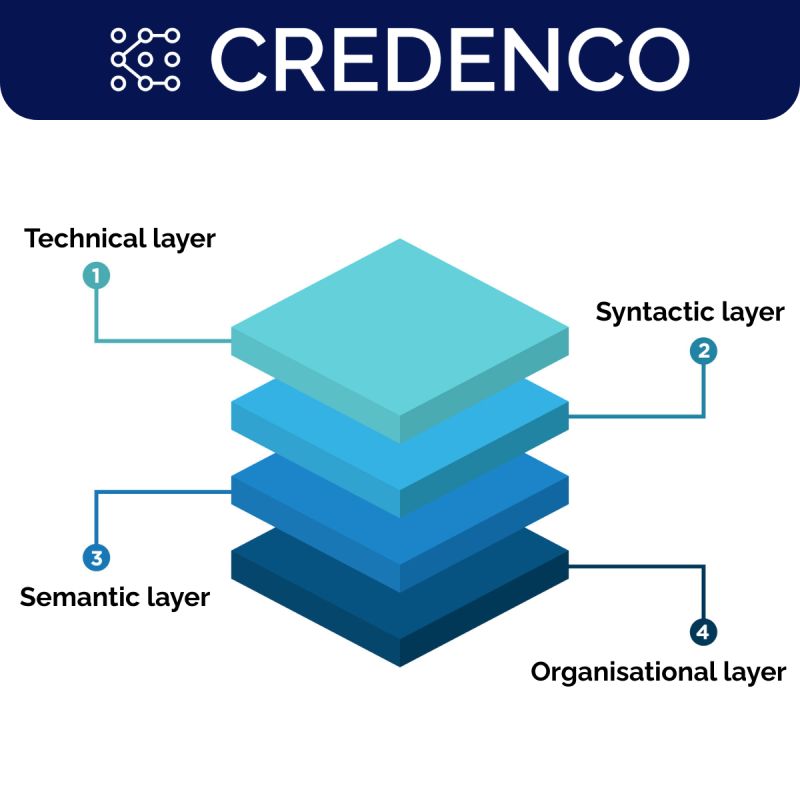
Interoperability sounds technical, until you actually try to use a credential across borders. Four layers must align before a credential can move seamlessly from issuer to verifier.
Interoperability sounds technical, until you actually try to use a credential across borders.
Imagine a company shares a Verifiable Credential through a wallet stating that someone is a Legal Representative. Simple, right? For it to work in practice, four layers must align.
The technical layer: can the receiving system process the credential format and protocol? The syntactic layer: is the structure and schema correct? The semantic layer: does "Legal Representative" mean the same thing everywhere? The organisational layer: does the receiver trust the issuer and accept the credential?
If one layer fails, automation stops. Only when all four align can a credential move seamlessly across borders, automatically and reliably.
That is real interoperability. Not just connected systems, but shared meaning and trusted governance. That's where digital trust begins.
Share this item
If you want to share this item to your socials or via mail click the button below.
Want to know more?
Curious about how this applies to your organisation, or want to talk to us about a specific use case? Get in touch. We're happy to help.