Connecting digital identity and payments across Europe
The EPC launches SCARLET, a common rulebook for using EUDI Wallets for Strong Customer Authentication
EU Digital Identity Wallets will give people new ways to prove who they are online, including when paying. The European Payments Council's SCARLET initiative sets out to make that work the same way across Europe.
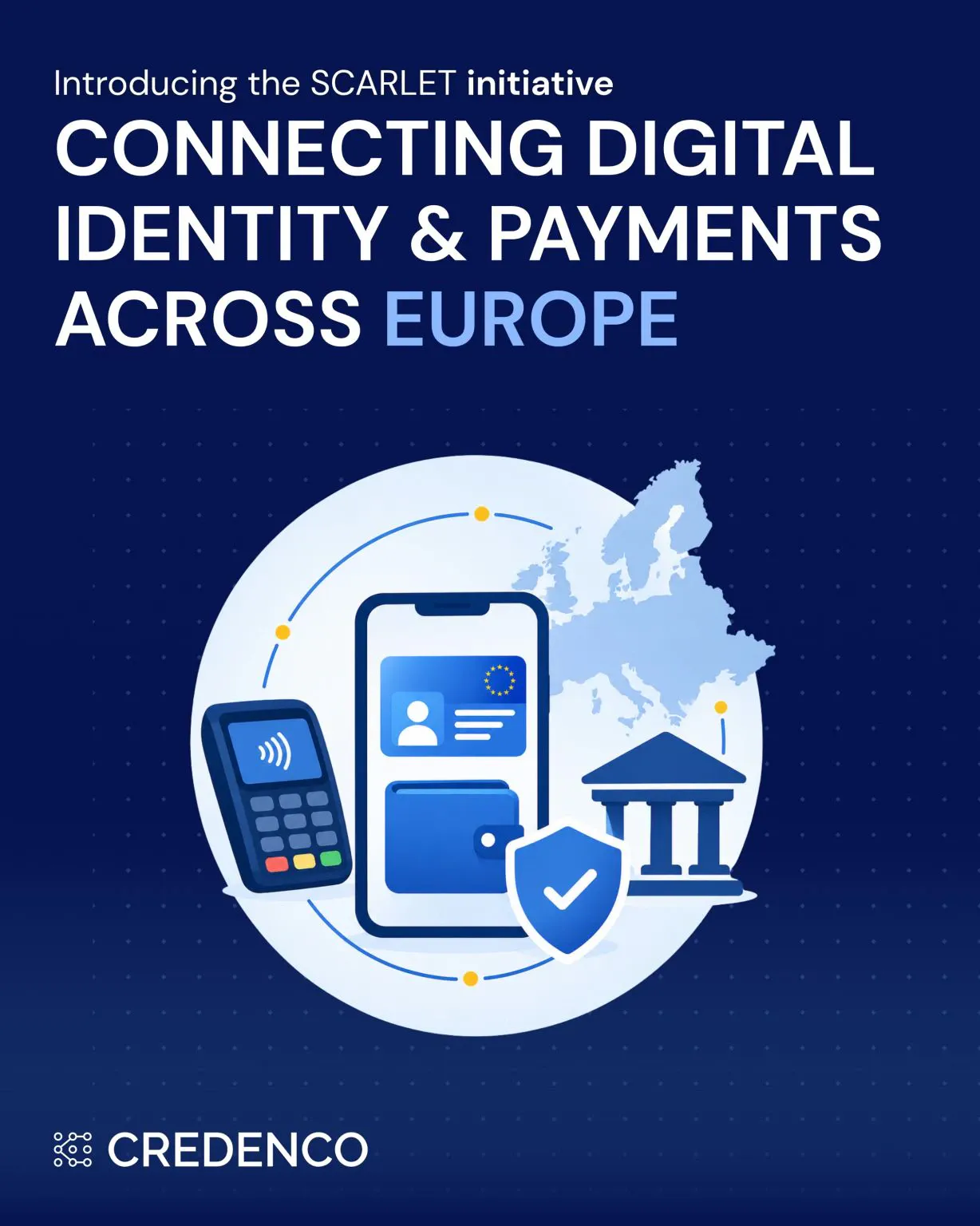
EU Digital Identity Wallets will offer new ways for people to prove who they are online, including when making payments. But for this to work across Europe, we need more than technology. We need a common approach.
That is where the SCARLET initiative, launched by the European Payments Council (EPC), comes in.
SCARLET aims to establish a common rulebook for using EUDI Wallets for Strong Customer Authentication (SCA). This can help ensure that banks and payment providers across Europe follow a consistent approach, rather than developing different solutions for each country.
The goal? Making digital identity work across borders.
- Common rules
- Trusted authentication
- Technical and semantic interoperability
What the EPC decided
On 24 September 2026 the Board of the EPC approved the start of the development of SCARLET, short for Strong Customer Authentication Acceptance Rulebook and Liability Framework for EUDIW Transactions. It is a standardisation framework designed to support the consistent acceptance of EU Digital Identity Wallets by payment service providers (PSPs) in the context of SCA.
The initiative responds to the growing market interest in digital identity for payment services, and to the forthcoming obligation under eIDAS 2.0 for PSPs to accept EU Digital Identity Wallets for SCA when end users choose to use them. With more than 3,000 PSPs and over 27 wallet providers expected to operate in the EU and EEA, SCARLET is meant to reduce the risk of many separate and potentially non-interoperable approaches emerging across Europe.
What the scheme will cover
As part of SCARLET, the EPC plans to develop:
- A business and contractual framework that defines the scheme actors, the eligibility requirements, and the rights and obligations of the legal entities taking part.
- Common functional and operational rules.
- Technical specifications, building on the work the European Commission has already done with the Architectural Reference Framework and the related technical specifications, and taking the contributions of the Large Scale Pilots into account.
Version 1.0 of the scheme will focus on the acceptance of EU Digital Identity Wallets by PSPs under the existing Payment Services Directive (PSD2), the European Banking Authority's Regulatory Technical Standards for SCA and the applicable level 2 legislation. A later version 1.1 will extend the framework to the forthcoming Payment Services Regulation, so that participating PSPs are compliant from 2028 and 2029 onwards while preserving their earlier investments.
The work follows an invitation from DG CNECT and DG FISMA at the European Commission. It will be carried out by an EPC taskforce in close collaboration with the European Commission and the European Banking Authority, with the EUDI Wallet ecosystem and other industry stakeholders involved through an EPC multi-stakeholder group.
Why it matters
Paying is one of the clearest everyday moments where people will reach for their wallet. If every country, bank and wallet provider solved authentication in its own way, the result would be complexity and cost for everyone involved, and an uneven experience for citizens. A shared rulebook keeps the promise of the wallet intact: one wallet, accepted everywhere.
Another important step towards a more connected European digital identity ecosystem.
Read the announcement on the European Payments Council website.
Share this item
If you want to share this item to your socials or via mail click the button below.
Want to know more?
Curious about how this applies to your organisation, or want to talk to us about a specific use case? Get in touch. We're happy to help.